Friday, September 23, 2022

Our STEAMY Class

Things are getting STEAMY in our class---as in Science, Technology, Engineering, Arts, and Math.


Students worked with lines and curves on OSMO. 
.
A solid (baking soda) and a liquid (vinegar) produce a gas.

Heat causes a solid into a liquid 


We combined art and science as the students learned about autumn. It's interesting to see the variety of artistic interpretations of fall colors. And of course, to accompany our fall art, we wrote about fall. (Even though writing isn't a STEAM activity, it's important to be able to communicate what we've discovered.)


Saturday, September 17, 2022

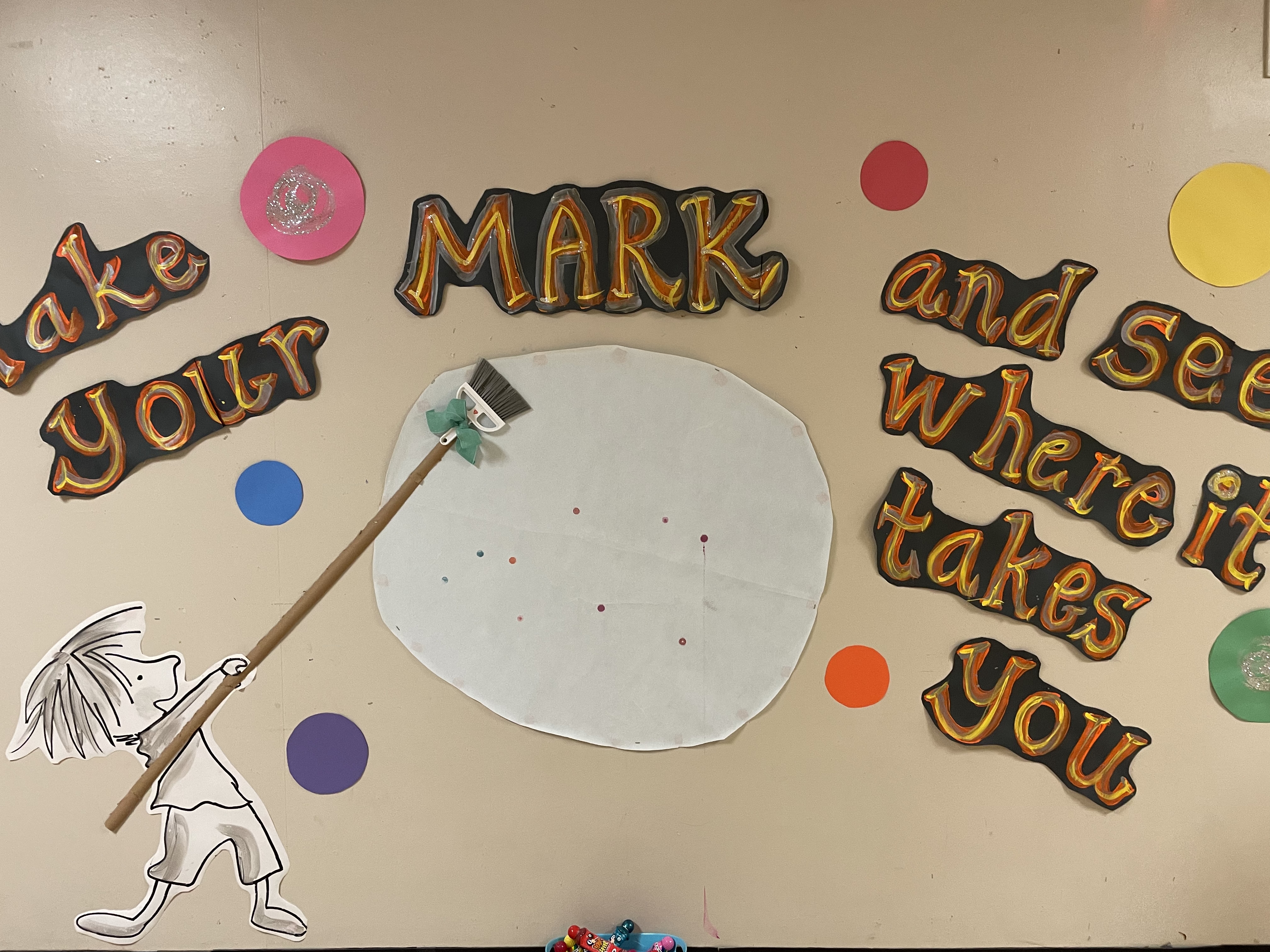
Make Your Mark

International Dot Day may be new to you, especially if you don't keep up with Children's Literature. So...to bring you up to speed...
In the children's book The Dot, by Peter H. Reynolds, we meet a little girl named Vashti who thinks she can't draw. Her art teacher advises her. "Just make a mark and see where it takes you." Vashti makes a dot on her art page, and much to Vashti's surprise, her teacher frames the dot picture. So this gets Vashti's creative juices flowing, and before too long Vashti has painted a gallery full of masterpieces.

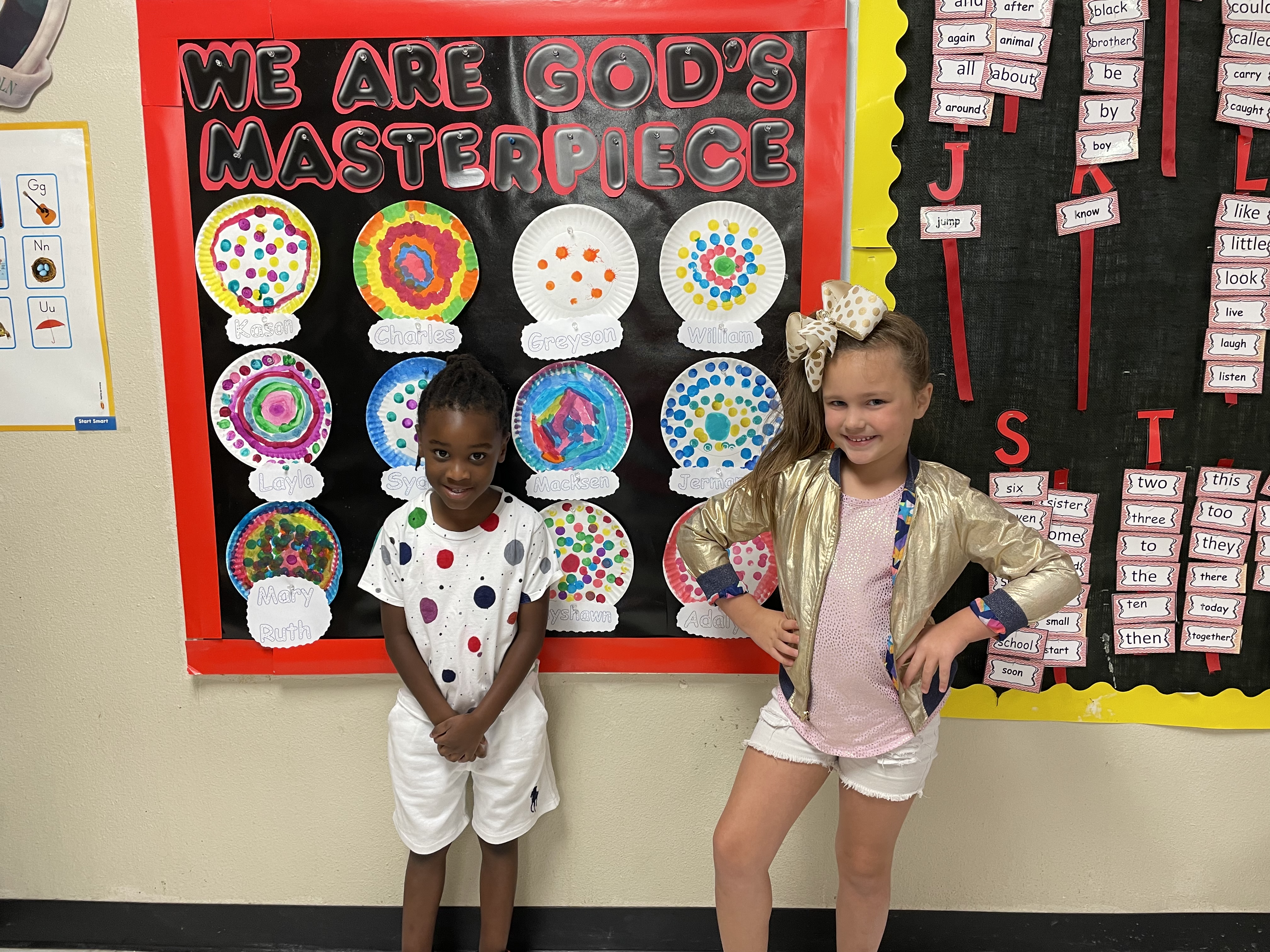
The Bible tells us we are each an individual masterpiece of our Creator God. 


"For we are God’s masterpiece. He has created us anew in Christ Jesus, so we can do the good things he planned for us long ago." Ephesians 2:10 New Living Translation

The Greek word translated "masterpiece," or "workmanship," is poiema. God created us in His image, and as His children, we bear a resemblance to our Heavenly Father. God is creative, and He allows us to create, too. Each one of us is unique, and before we were born, God prepared good works for us to do.

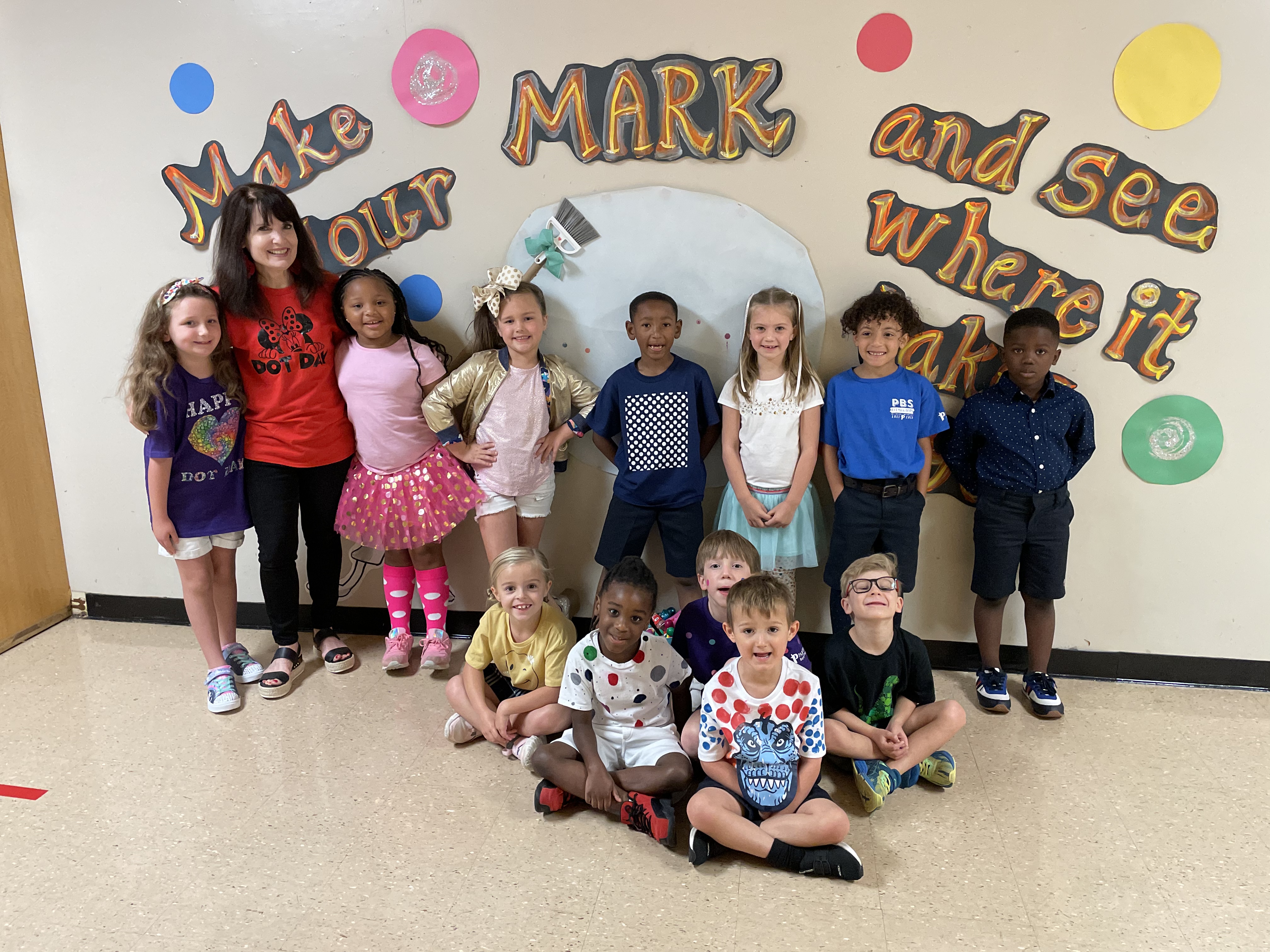
On Dot Day, the students exercised their creative muscles. They were encouraged to be brave and make their mark.
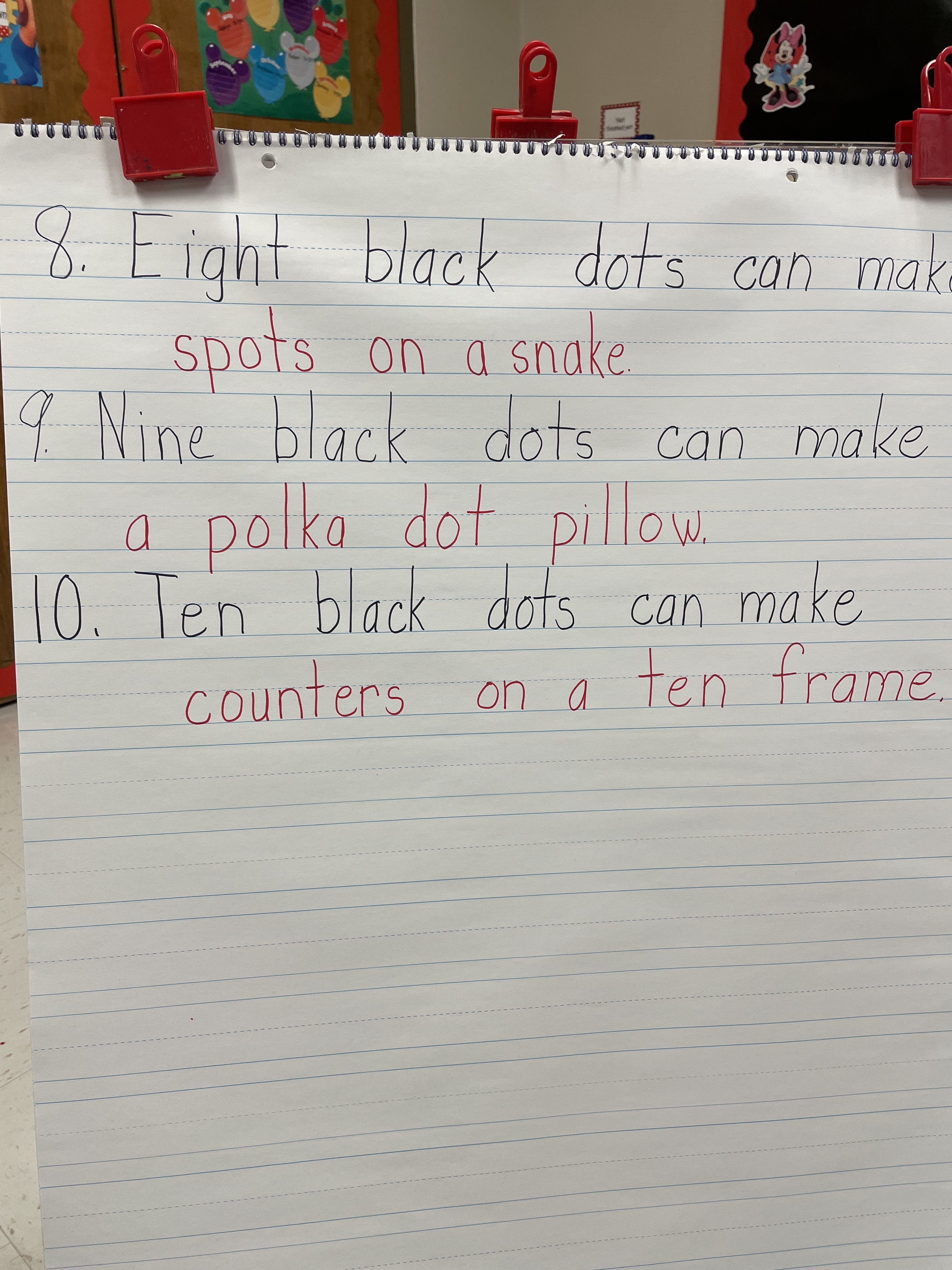
We had lots of fun with dots. We explored new and creative ways to practice addition skills. Dots on dominoes, dots on dice, dots on a game called "Splat,".... all these dots provided opportunities to add.


 Dots were everywhere! They even showed up as stickers on the Sight Word Booklets. And International Dot Day didn't keep our students from making progress in learning their sight words.


Creativity can take many forms.  It isn't limited to the visual arts such as painting, drawing, and sculpting. Creative expression can mean writing a story, composing a song, or coming up with innovative solutions to problems. Culinary concoctions, theatrical performances, computer software, and scientific innovations are all manifestations of creativity. 
Who knows what wonders these students will create as they discover their God-given talents and as they make the most of the opportunities God brings their way!


Friday, September 9, 2022

Taste and See

"Taste and see that the Lord is good;
    blessed is the one who takes refuge in him." (Psalm 34:8 NIV)

This week in Science Lab, the students investigated God's magnificent creation.  We've been learning about apples, so this week's  lab was especially tasty. How amazing that a tiny seed can grow into a magnificent tree! And how wonderful that the flesh of the apple, meant to nourish the tiny seedling, provides us with nutritious, delicious fruit!
Will the apple sink or float?
Hooray! Our hypothesis was correct.
Weighing, Measuring, Recording Results
How many seeds does this apple have?


And now for the taste test...
Apple pie? Applesauce? Apple slices? Which one do we like the best?
Being a scientist has its rewards.

Most of the class liked the apple pie best. Now we'll make a graph to record our results.


Friday, September 2, 2022

Finding the Right Amount of Tension

"Whatever you do, work at it with all your heart, as working for the Lord" (Colossians 3:23 NIV).


We used OSMO to work on Number Sense.

OSMO is a fun way to practice skills in math, phonics, science, and social studies.

We worked hard on phonics and handwriting.

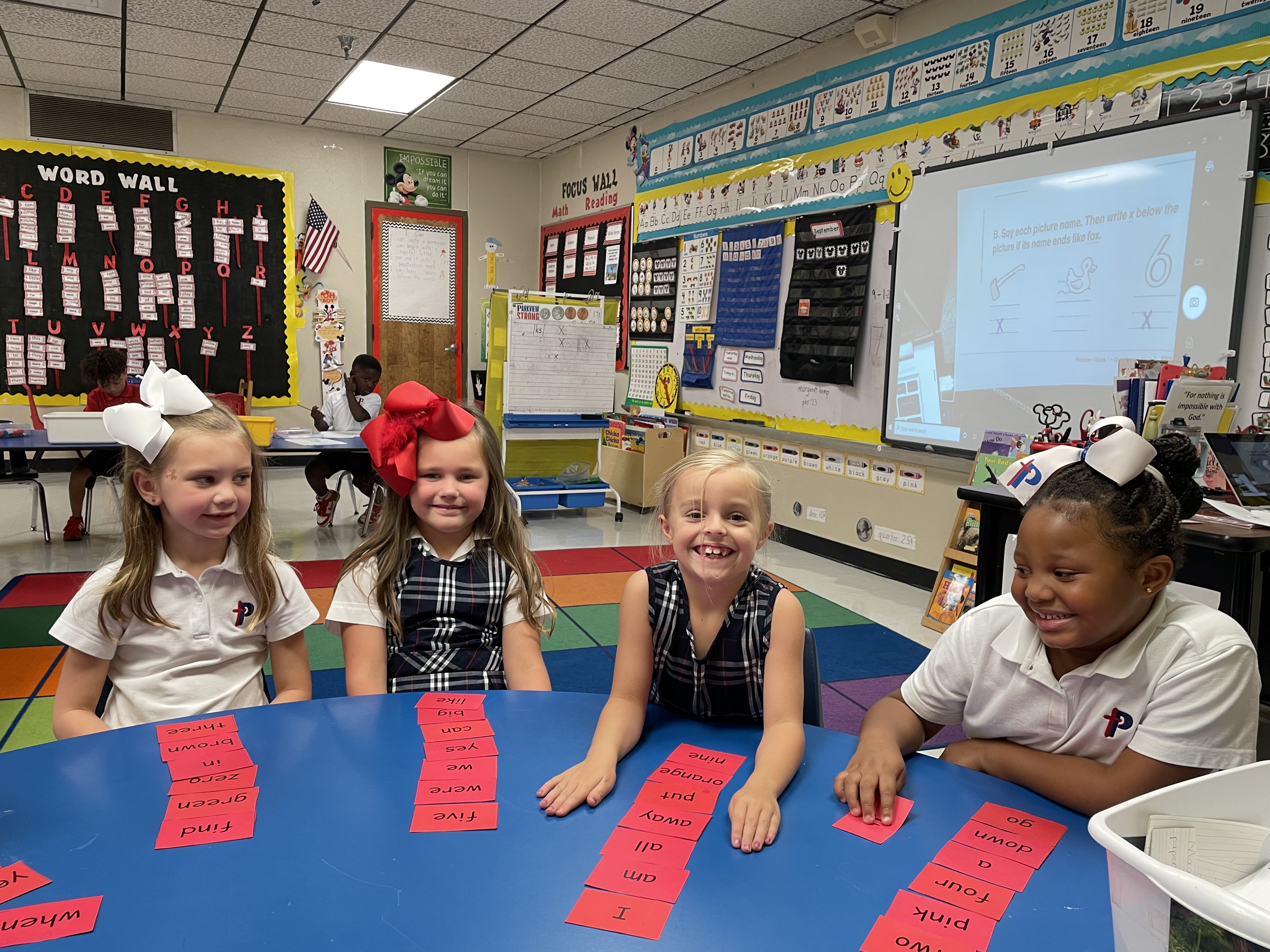
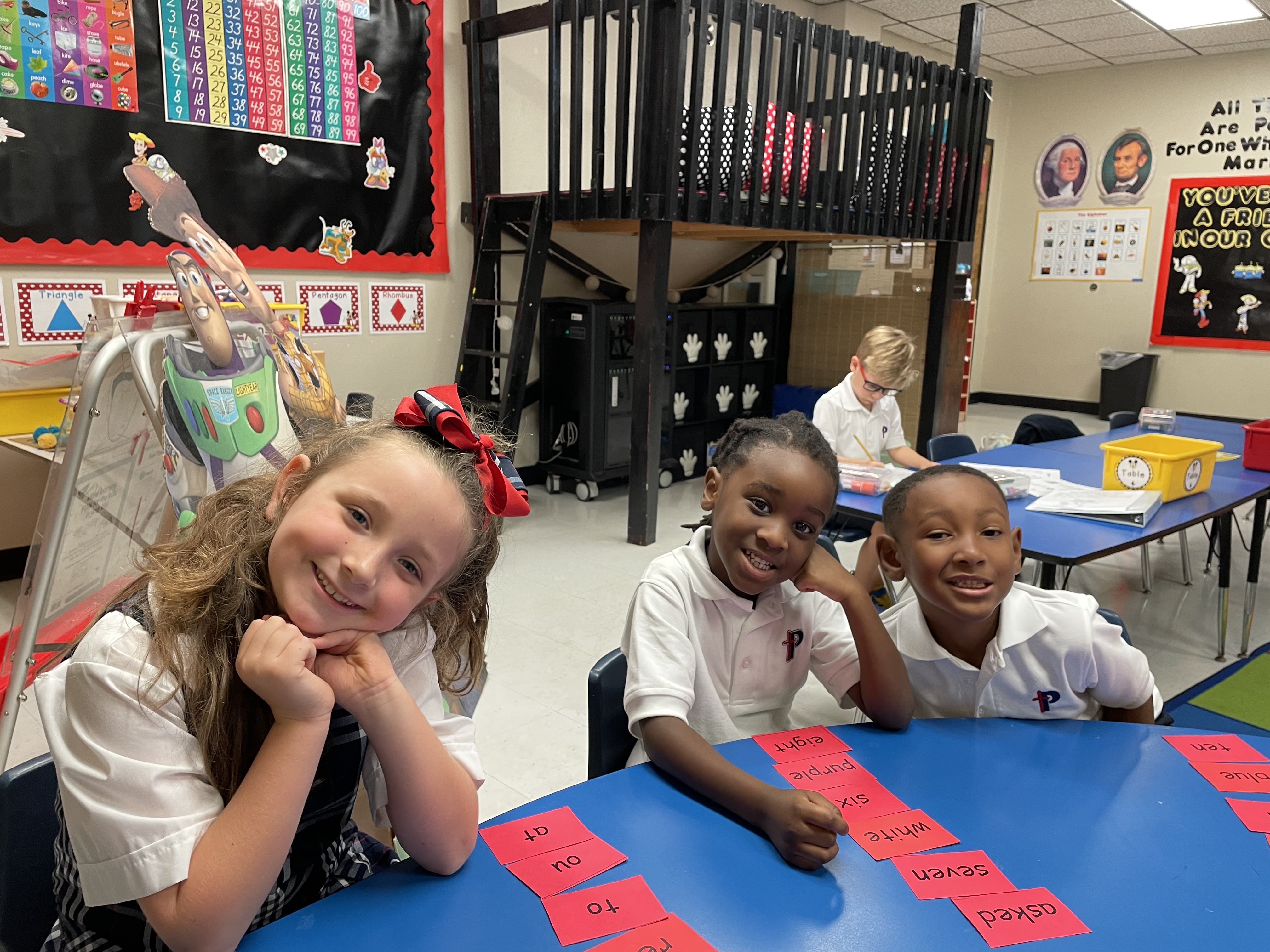
We played "I Have, Who Has."

This game helps us learn Sight Words.

Helping students achieve their potential is a lot like tuning a guitar.

To deliver the desired notes, the guitar strings need the right amount of tension. If the strings are too slack, the notes are flat. But if the strings are wound too tightly, they produce a sharp sound. If tightened too much, they may even break. 

  The same is true for the classroom. God created children with beautiful potential.  But if discipline is too lax, and if the students are given too much slack, that beautiful potential will never become reality. 

On the other hand, if there’s too much tension, if the atmosphere in the class is too sharp, the results won’t be pretty.

The same is true with academics. In order to learn new things, students need to struggle a bit. A certain amount of tension is necessary. If the work is too easy, chances are the students aren't learning anything new---just reviewing what they already know. But if the work’s too hard, the students become frustrated. 

As a teacher I’m constantly trying to provide the right amount of tension. I push the students to accept new challenges but to recognize when they’ve given all they can.

I try to make learning fun by adding games and varying activities. But at the same time, I remind the kids that sometimes we have to do things we don't particularly enjoy. Yet if we put in some hard work in the beginning, reading, writing, addition, and subtraction will eventually become second nature. 

And when we find the right amount of tension, we hear the beautiful sound of children who are excited to learn. 

Sunday, August 28, 2022

Learning to Work and Play Together

"And I am sure of this, that he who began a good work in you will bring it to completion at the day of Jesus Christ." Philippians 1:6 ESV

Each one of us is a work in progress. And five- and six-year-olds are growing and developing in many areas. An important aspect of Early Childhood Education is the development of social skills. In the school setting, young children are learning how to learn in groups. They're also learning how to interact with one another during playtime. 
We're learning to help one another...find the page, read the word, understand the directions.

We're learning to learn in a group setting...where we take turns talking, refrain from interrupting, and refrain from distracting our classmates.

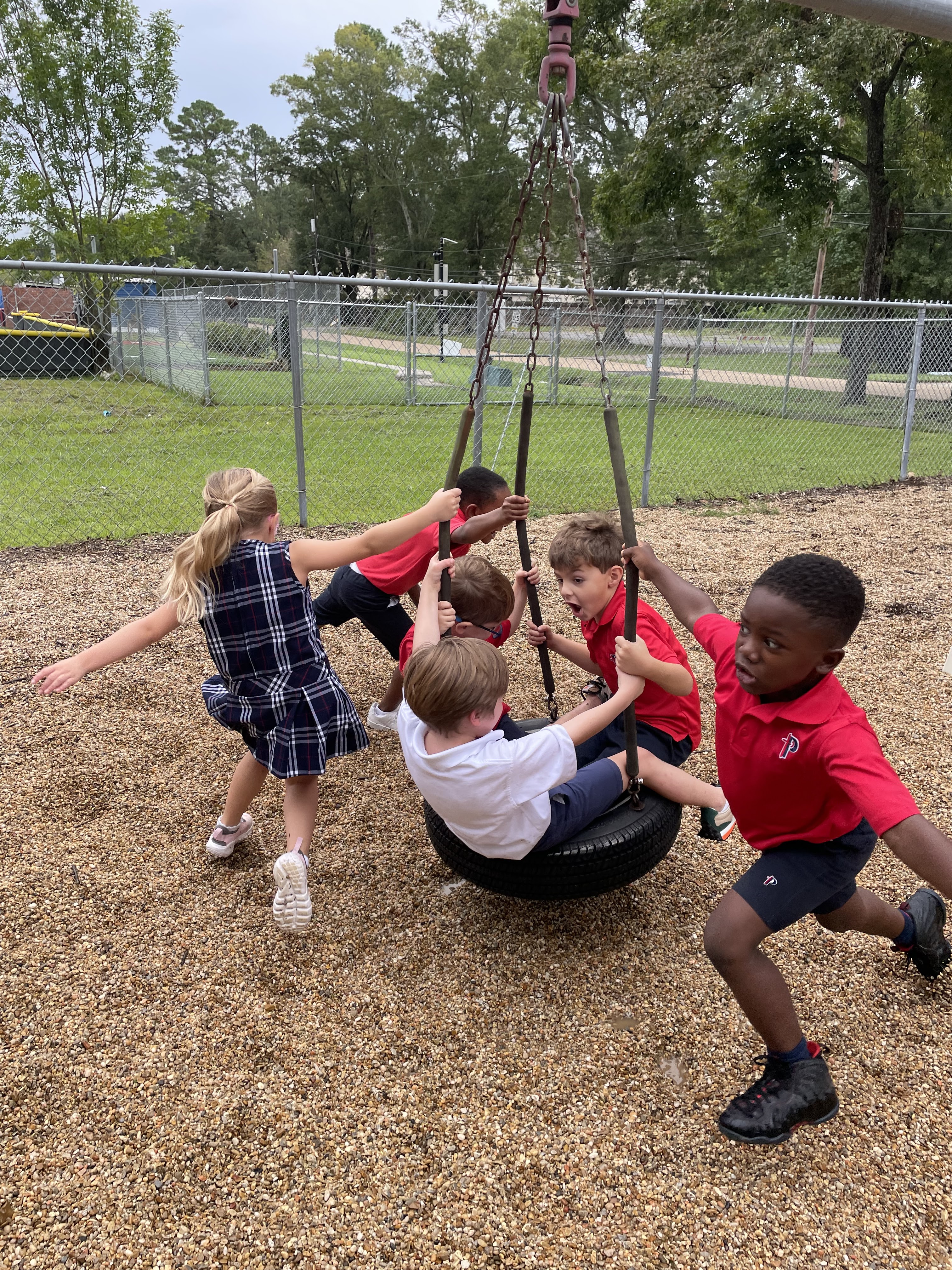
We're learning to play together, to share, to listen to our friends' ideas, to collaborate.

We're learning to be considerate of our friends...
...and to take turns.


We're learning to work together in pairs.


We're learning to work together in groups.

 The EC teachers' professional reading this summer was a book entitled The Importance of Being Little by early childhood expert Erika Christakis. In her chapter "Played Out," Christakis discusses how adults can help children navigate the inevitable conflicts that arise as children are learning to play together. She has much wisdom to offer on the subject, so I thought I'd share some of her advice.

"Sometimes we overidentify with our children, which makes us unreliable play coaches. I have been guilty of this many times, convinced my little darlings were being persecuted when in fact they were stirring up trouble...One of the unsung gifts of modern parenting is the enhanced intimacy we feel with our children, but it can be stifling to the cause of unencumbered play," she writes. 

I can relate. As a young mother, I often tried to rush in and solve my children's social problems. But after 40 years of teaching young children, I've learned it's more important to teach children how to deal with conflicts that arise during play.

Here are Erika Christakis' recommendation to adults who want to help their children build resilience through play:
  • Practice gentle deflection. When a child reports a negative incident on the playground, clarify that it's not dangerous or destructive, and then move on. ..say, "That sounds annoying, but let's see what' in your backpack."
  • If a child reports being called mean words, empower her in a relaxed tone: "But we know you're not a baby! That sounds like silly talk to me."
  • Redirect a child who makes sweeping generalities. ("He's always taking my toys away.")…Even little kids can have "frenemies" who grate on their nerves yet offer something worthwhile...rich, extended play serves the dual function of revealing these human challenges and teaching children how to cope with them.
  • Remind our children that everyone has struggles to work on when they play. Some kids are shy. Some have trouble controlling their bodies. Some people are good at rules, but aren't very friendly....
  • Avoid using the word "bully to describe one-off or even multiple episodes of unkindness from four-and five-year olds. "Bullying" is one of the most over-used words in the school lexicon...In any case, bullying requires a pattern of chronicity and intentionality that describes older children's behavior, not preschoolers' and kindergartners' play.
  • Teach children to explicitly disengage when they are feeling put-upon. …If you don't want to be chased, stop running. If a child doesn't want to be the cage cleaner in the Animal Hospital game, she can insist on a new role... Or simply walk away. A new game is always waiting.
  • And my most heartfelt suggestion" recognize our children's power. Young children are usually strong enough not to be knocked off their feet by an occasional bad play date and we don't need to stage-manage their play or try to process every infraction with them under the guise of learning, or try to arrange---pitifully and impossibly--for all experiences to be pleasant.
Christakis, Erika. The Importance of Being Little: What Young Children Really Need from Grownups. New York: Penguin Books. 2016